Who should shape the classroom?
The book examines how major instructional decisions increasingly moved away from classroom teachers and toward outside systems and theories.
The Importance of Involving Classroom Teachers
After 36 years in education, Vincent B. Troiano examines what changed when classroom teachers became less influential in the decisions shaping their own classrooms.
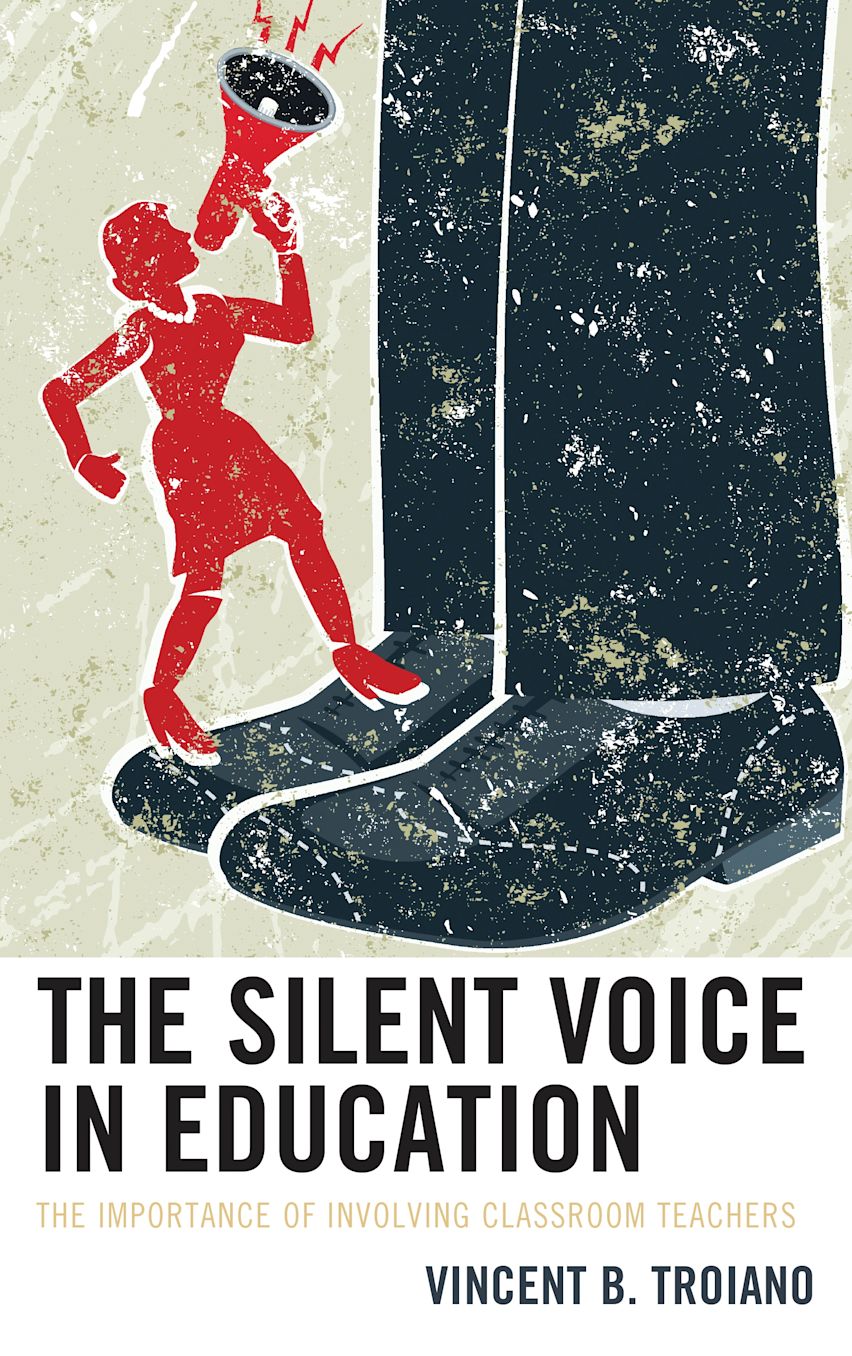
After 36 years in education, Vincent B. Troiano examines what changed when classroom teachers became less influential in the decisions shaping their own classrooms.
Buy the Book
The Silent Voice in Education looks at decades of reform through the eyes of someone who spent his career doing the work: teaching students every day.
The book examines how major instructional decisions increasingly moved away from classroom teachers and toward outside systems and theories.
Drawing on 27 years in special education, Troiano explores the gap between formal policy and the day-to-day judgment teachers use with individual students.
From curriculum and evaluation to local leadership and individual instruction, the book argues for a stronger role for teachers closest to students.
Book details: Published November 27, 2018 by Rowman & Littlefield. Paperback ISBN 9781475848458; hardback ISBN 9781475848441; ebook ISBN 9781475848465. View the official publisher listing.
Up until the 1960s, elementary classroom instruction was based on the most effective procedures developed by classroom teachers, and American education was ranked number one in the world.
A downward trend began with "New Math" and reading programs that discouraged the use of phonics. These programs were developed within higher education and were supposed to be more effective than the procedures favored by the great majority of classroom teachers.
That downward trend accelerated in the 1980s, when the evaluation of classroom instruction was changed. Teachers were no longer recognized as having individual, yet effective, styles of teaching. Higher education created new criteria it considered more effective in the classroom, and this became the new basis for teacher evaluation and continued employment.
The author's related article, "Whatever Happened to Arithmetic," offers parents an explanation of the origins and use of "New Math" in the elementary school curriculum.
When the book was written, St. Lucie County, Florida had two K-8 schools. Today there are eleven, with a twelfth under construction. The middle school concept, with its varied mix of grade levels, was another product of the 1960s, and it apparently does not offer the educational continuity that a K-8 school does. Its sketchy record of success is most likely due to teacher competence, rather than the application of new psychological theory or school organization.
What's most important is this book is written by a teacher!
Allen McQuarrie — retired science teacher and NJEA leadership-training representative

How classroom teachers responded as new instructional theories and systems reshaped schools.
The role local decision-making can play in keeping education connected to students and classrooms.
What decades of firsthand special education experience reveal about reform, management, and bureaucracy.
Fifty years of teacher evaluations indicated that good teaching came from individual styles. In the mid-80s, higher-ed created requirements to standardize instruction.
The tension between formal documents, goals, and the continuous judgments teachers make with individual students.
Why experience-based ideas from teachers can endure — and what institutional failures can teach us.
Explore Vincent B. Troiano's 36-year perspective on education reform, special education, local control, and the role of teacher judgment.
Buy the BookHow Vincent connects developmental readiness, math terminology, and his critique of New Math in the elementary grades.
Read more →Why self-contained special education classes fell short, and what Vincent observed when students returned to regular classrooms.
Read more →Phonics instruction for the first three years of elementary school is a proven method of teaching children how to read successfully.
Read more →For questions about The Silent Voice in Education or Vincent B. Troiano, contact us by email.
cmdobrow@yahoo.com